
Self-Care That Exhausts You
Why Even Rest No Longer Feels Restful and Turns Into Another Task
Self-care was meant to restore energy, improve emotional balance, and support long-term wellbeing. Yet today many people experience self-care fatigue. Relaxation is planned, optimized, tracked, and evaluated. Instead of calm, we feel pressure. Instead of recovery, we experience emotional burnout.
Why has self-care turned into another performance goal rather than a source of true relaxation?
Modern research in psychology, neuroscience, and dermatology shows that chronic stress, digital comparison, and perfection-driven wellness routines directly affect mental balance and skin health. Understanding this connection helps restore genuine wellbeing and healthy skin balance.
When Self-Care Becomes a Productivity Project
Contemporary wellness culture often treats a self-care routine as a measurable achievement. Sleep tracking, fitness monitoring, detailed skin care regimens, structured morning rituals — everything can be optimized.
While structure supports discipline, excessive optimization increases cognitive load. Psychological research demonstrates that the brain has limited resources for continuous self-control. When relaxation becomes task-oriented, it activates the same neural systems used for work performance. Over time, this leads to mental exhaustion rather than stress relief.
Signs of Performance-Driven Self-Care
Feeling guilty for skipping a beauty or wellness ritual
Scheduling relaxation with strict productivity standards
Comparing your lifestyle or appearance to others
Measuring results more than noticing sensations
Research confirms that intrinsic motivation supports emotional balance, while external pressure increases cortisol levels and reduces the restorative effect of rest.
The Science of Rest and the Brain
Neuroscientific findings show that true recovery requires unstructured time. Emotional processing, creativity, and memory integration depend on periods without measurable goals.
When evening routines are tightly controlled and evaluated, stress hormones may remain elevated. Even low-level chronic stress affects sleep quality, skin regeneration cycles, and collagen production.
What Real Rest Includes
Time without measurable outcomes
Activities not shared or documented online
Sensory comfort: warm water, soft textures, natural light
Gentle skin care rituals focused on hydration and barrier repair
Minimalist cosmetic care can function as a grounding ritual when performed slowly and without pressure. Hydrating creams, calming textures, and night repair formulations support both the skin barrier and nervous system regulation.
Social Comparison and the Wellness Illusion
Digital culture has transformed wellbeing into performance. Glowing skin, perfect routines, curated calm interiors — everything becomes visible and comparable.
Constant comparison increases anxiety and reduces life satisfaction. Self-care becomes competitive rather than restorative.
How Comparison Affects Skin and Emotional Health
Increased body image pressure
Anxiety about visible signs of fatigue
Overuse of cosmetic products
Impaired skin barrier due to stress
Dermatological evidence confirms that chronic stress disrupts the skin microbiome, increases inflammation, and slows natural regeneration. Balanced skin care products that focus on hydration, barrier strengthening, and sensitive skin recovery are more effective than aggressive multi-step routines.
The Biological Impact of Chronic Micro-Stress
Chronic micro-stress accumulates even when individual demands seem minor. Physiological load often manifests visibly in skin condition and recovery capacity.
Dull or dehydrated skin
Increased sensitivity and redness
Tension in facial muscles
Disturbed sleep cycles
Prolonged cortisol elevation impairs collagen synthesis and weakens protective skin function. Gentle evening cosmetic routines that focus on hydration, night repair, and skin barrier support activate natural recovery mechanisms.
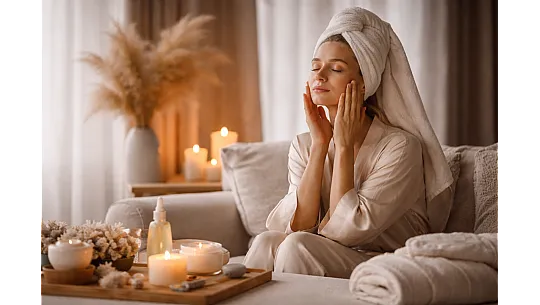
Application technique also matters. Slow facial massage with nourishing textures enhances circulation and absorption, while rushed routines reduce their restorative potential.
Reframing Self-Care: Simplicity as a Strategy
Effective self-care is consistent and sustainable rather than complex. Research on self-compassion demonstrates that internal kindness lowers stress biomarkers and improves resilience.
Principles of Restorative Self-Care
Fewer, high-quality cosmetic products
Evening hydration-focused skin care routine
Barrier-repair formulations for sensitive skin
Digital boundaries before sleep
Listening to bodily signals instead of trends
Modern dermatology increasingly supports minimalist skin care, microbiome-friendly formulations, and restorative night creams for long-term skin health and visible glow.
* * *
When self-care turns into control, exhaustion replaces recovery. When rest becomes another task, the nervous system remains alert instead of relaxed.
Sustainable wellbeing emerges from simplicity, consistency, and sensory comfort. Healthy skin, emotional balance, and deep relaxation are interconnected.
A calm evening skin care routine focused on hydration, repair, and gentle textures supports visible radiance and internal equilibrium — without pressure or comparison.
The most important question is not whether you are doing enough.
It is whether your routine truly restores you.