
Offline Is the New Luxury
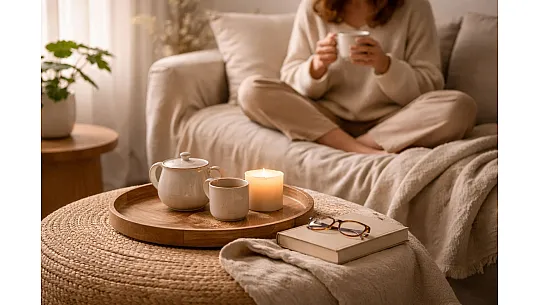
How Returning to Tactile Experience Transforms Everyday Quality of Life
Digital connectivity has become the default setting of modern life. We work, communicate, shop, and relax through screens, often without clear boundaries between professional and personal time. Yet as connectivity increases, so does the desire for disconnection. Within the digital detox lifestyle and slow living trend, offline experience is no longer a limitation. It is emerging as a refined form of modern balance and conscious wellbeing.
Digital Saturation and the Attention Economy
Behavioural science consistently shows that human attention is finite. Continuous notifications, multitasking, and rapid content consumption fragment cognitive focus. Research on attentional residue suggests that frequent task switching reduces depth of processing and increases perceived mental fatigue.
This does not imply that technology is harmful. Rather, constant availability creates cognitive overload when not managed intentionally. In high-performance environments, the ability to direct attention deliberately is increasingly recognised as a core competence.
A digital detox lifestyle reframes technology as a tool instead of a default environment. Practical shifts may include:
scheduled screen-free intervals during the day;
disabling non-essential notifications;
separating work platforms from leisure spaces;
avoiding screen exposure during the first and last hour of the day.
These micro-boundaries restore continuity of thought and improve perceived control over time. In this context, offline moments are not empty; they are cognitively restorative.
The Psychology of Tactile Experience
Human perception is multisensory by design. Touch, scent, texture, and spatial awareness anchor attention in the present moment. Studies in environmental psychology indicate that tactile engagement increases emotional grounding and enhances memory encoding compared to purely visual digital stimuli.
In practical terms, tactile experience reintroduces depth into daily rituals. The texture of natural fabrics, the warmth of water during an evening skincare routine, or the subtle fragrance of a carefully curated space provide sensory feedback that screens cannot replicate.
Offline rituals may include:
a deliberate skincare routine performed without digital distraction;
journaling with pen and paper;
preparing tea or coffee as a mindful process rather than a background task;
arranging living spaces with attention to material quality and sensory comfort.
These rituals reinforce embodiment. They shift focus from passive consumption to active participation in one’s environment, strengthening emotional resilience and everyday wellbeing.
Physical Spaces as Instruments of Modern Balance
As homes increasingly function as offices, studios, and social hubs, spatial boundaries become psychologically significant. Research in environmental design suggests that defined zones support behavioural clarity. A chair used exclusively for reading signals rest. A table dedicated to work supports concentration.
Creating intentional offline zones does not require large spaces. It requires design logic. Elements such as natural light, textured materials, calm colour palettes, and thoughtful organisation contribute to perceived stability.
Within a lifestyle and beauty context, the physical environment becomes part of self-care. Skincare products displayed with intention, textiles chosen for comfort, and curated objects that reflect personal identity transform routine into ritual. This alignment between space and behaviour supports sustainable work-life balance.
The Slow Living Trend and the Value of Ritual
The slow living trend is frequently misunderstood as reduced productivity. In reality, it prioritises depth over speed. Psychological research highlights that repeated, meaningful routines enhance a sense of coherence and stability.
Offline rituals function as temporal anchors. Morning and evening practices, when protected from digital interruption, create rhythm. Rhythm reduces decision fatigue and supports emotional regulation.
Examples of structured offline habits include:
beginning the day with movement or reflection before accessing devices;
allocating uninterrupted time for personal care;
engaging in in-person social interactions regularly;
concluding the evening with low-stimulation activities such as reading.
These practices do not eliminate digital tools. They contextualise them. Technology remains present but no longer dominates transitional moments of the day.
Offline as a Contemporary Status Symbol
In previous decades, constant availability signalled ambition and relevance. Today, the capacity to disconnect signals autonomy. The ability to step away from the digital flow reflects disciplined attention management.
From a lifestyle perspective, offline time aligns with quality-driven consumption. Individuals increasingly invest in durable materials, refined skincare routines, and aesthetically considered interiors. This shift reflects a broader movement from accumulation toward curation.
Modern balance is not about strict separation. It is about conscious alternation. When online engagement is purposeful and offline time is protected, daily life gains contrast. Contrast enhances appreciation. Sensory richness becomes noticeable again.
In this framework, offline is not nostalgia. It is a deliberate recalibration of priorities.
* * *
The renewed value of offline experience reflects a deeper cultural transition. As digital systems optimise speed and accessibility, individuals seek grounding, texture, and embodied presence. The digital detox lifestyle and slow living trend are responses to cognitive saturation, not reactions against innovation.
By integrating tactile rituals, intentional spaces, and structured screen boundaries, it becomes possible to cultivate modern balance. Physical experience enhances emotional clarity. Aesthetic environments support focus. Rituals reinforce continuity.
Offline is not an escape. It is an investment in quality of attention. And attention, in contemporary life, may be the most refined luxury of all.